Fiscal Discipline and Individual Rights with Justin Bumpus
Today, our Grassroots Spotlight features Justin Bumpus, running for election as a County Commissioner in District 2.
“Governments do not actually make money, they just collect it. So being a good steward of that money is my top priority.”
Q: Q: Can you tell us a little bit about yourself?
I'm Justin Bumpus. I've been in Williamson County for 19 years. I moved here with my wife as a newlywed, bought a house in Spring Hill, where we've raised our 16 year old daughter. Getting ready to send her off to college.
Professionally, I'm the head of IT and information security for the Daily Wire.
I decided to run because being a resident for as long as I have, I've seen some of the changes, both good and bad that have happened within Williamson County. And God just put it on my heart that says I could be a voice for the folks in District 2 and make an impact in the Commission.
Q: What is the single most important "quality of life" factor in District 2 that you feel is currently under threat?
The overcrowding and traffic.
I live about 30 miles from work and it took me an hour and 20 minutes to get there this morning. And the overdevelopment of what's happening in District 2.
I can use June Lake and Spring Hill as an example. A beautiful several hundred acre farm is now turning into a 15 minute city with cookie cutter houses and just more cars and more traffic.
Q: What is the most common concern you’ve heard from your District 2 citizens?
The “reckless development” as they're calling it. Very fast development and they're raising property taxes.
I've had several folks that are retired and are on fixed income and are really concerned about the property taxes over the last few years that are really putting a burden on them today.
Q: How do you define the difference between "growth that pays for itself" and "growth that burdens the taxpayer"?
Growth that pays for itself is growth that can be funded by the initiative or can be paid back through what was built as part of that growth.
Growth that's a burden on the taxpayer are items that require subsidies from the government or incentives provided by the government in order for that development to happen.
Governments don't actually make money, they just collect it. So being a good steward of that money and not being a burden on the taxpayers through some of these growths that are a burden is not on my agenda.
Q: How will you navigate the new residential development proposal for the Bethesda or College Grove areas?
I would go into them a little bit skeptical just because of the rate of growth that we'd have.
I'd want to make sure that we have the supporting infrastructure: the sewage, water, first responders to support the growth ahead of time so that we're being proactive rather than being reactive to the growth.
And if growth and development were to happen, I'd much prefer single family homes with some grass between them over high density townhouses and in apartments and things that just stack people in cars into small areas.
Q: Aside from roads and schools, what other infrastructure needs do you see?
So I can use my town of Spring Hill as an example. We just had to put up another water tower because we were having issues with sewage and water and water pressure and things like that.
Those are parts of the infrastructure. People hear “infrastructure,” they think roads, but those are very important as well.
Q: How can the County Commission better support our local first responders to ensure response times don't lag as our population density increases?
I want to ensure a robust first responder population prior to the growth. Again to be proactive rather than reactive.
Always ensure it's funded, ensure that those first responders are getting the best training, the best opportunities to have the best equipment and to be able to also be efficient so that where we have spots where they're spread thinner, they can be as efficient as possible in those areas.
Q: What lessons from your professional background would help the County Commission when discussing the budget?
As my day-to-day job in IT, I'm in charge of a multimillion dollar budget that I'm accountable to. Part of that includes finding savings if we need to find savings, justifying each spend every time I'm asking for money.
Being on the receiving end of that, I know how to question that when people are coming to me for a budget request.
And then on a personal aside, outside of my mortgage, I live 100% debt free. I don't have car payments, I don't do credit cards. I'm a cash-only kind of a guy. So I have fiscal responsibility both personally and professionally.
Q: When a vote comes down to a conflict between "property rights" and "community character," what is the primary lens you use to decide your vote?
My primary lenses are biblical worldview and individual rights.
I always lean towards the side of individual rights to the point where if we're talking about, we've talked about property taxes earlier, but to me a property tax especially is like the government's way of making sure you don't own your house anymore.
So that's how staunch of an individual rights person I am.
Q: What does "true transparency" look like to you, beyond simply attending the required public meetings?
I want folks to know from me, not just from going to some of those antiquated Williamson County sites, what's happening in the Commission.
Also letting the folks in my district know what I'm thinking, why I'm thinking of voting the way that I'm thinking. But also be accessible to hear varying opinions and voices, within the district. Because I'm one person, I may not think of everything.
So I want to make sure that I'm hearing all the different opinions and viewpoints so that I'm making the most informed decision and able to explain that decision to the folks in the district.
Q: By the end of your first term, what is one tangible project or change in District 2 you'd like to have achieved?
Honestly, I think my biggest thing would be a material reduction in the County debt, and the elimination of any wasteful program spending in the county.
I feel like if there was a really close look at some of the funding that's happening, we may be able to find wasted funds that could go into paying that budget down.
So a combination of those two things, I would feel like I had a successful first term.
Q: Once the election is over, what is the most effective way for a busy parent or farmer in District 2 to contact you?
Via my email address. The email address I've used for my campaign is my personal email address or even my phone number, and leave me a voicemail.
I strive to respond to everybody within 24 hours, sometimes a little longer if I'm respecting holidays or religious events or something like that. But normally you can get a response within a day from me by email or voicemail.
Q: Anything else you would like District 2 citizens to know about you?
I'm one with strong biblical conviction, someone that's been in the community for close to 20 years now.
I'm not easily, well, I'm not really swayed at all by the folks around me. I'm held accountable to the folks that put their faith in me, and I would be just like that in this arena as well.
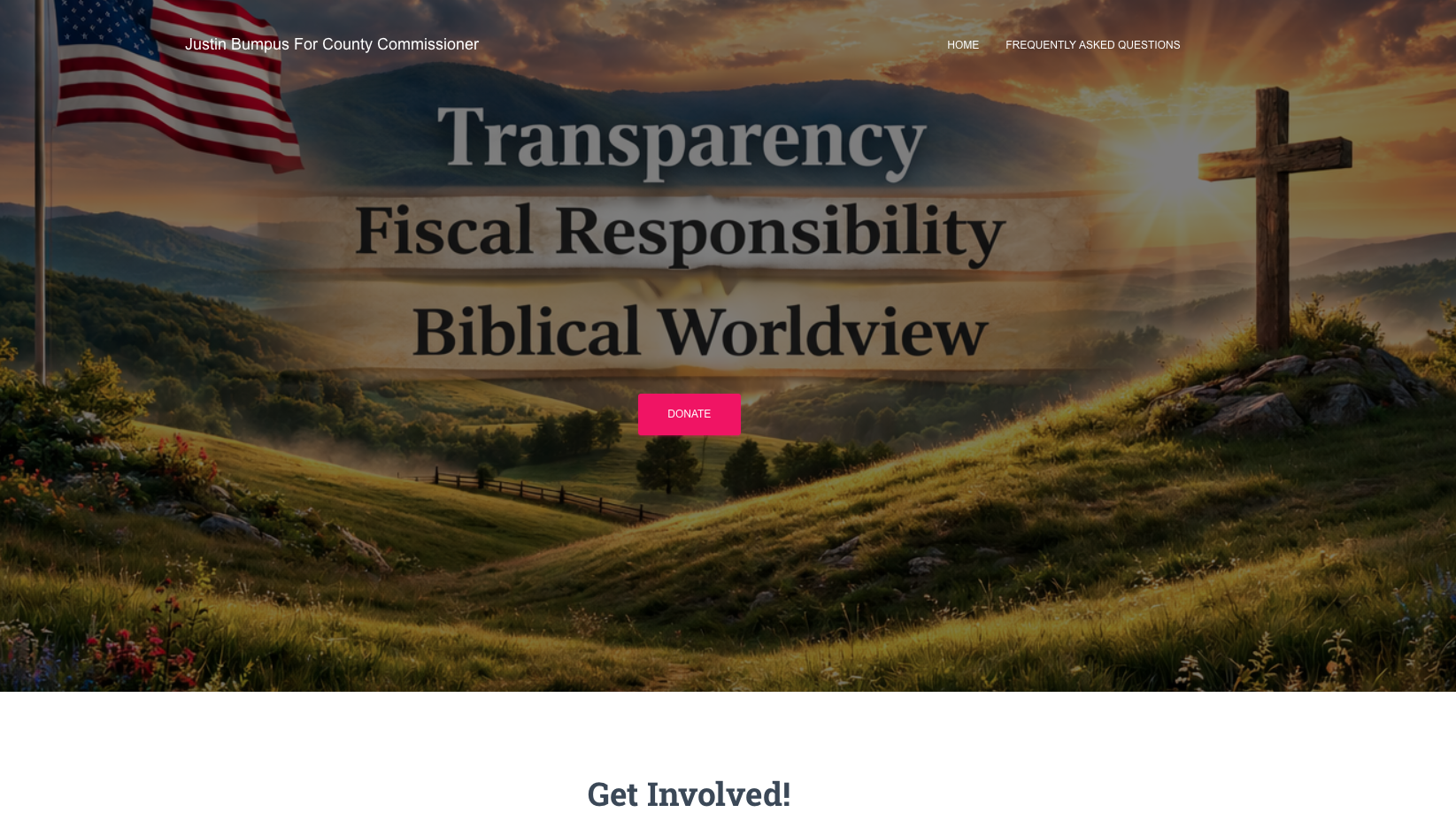
To learn more about Justin’s campaign and his stance on different issues in Williamson County, you can view his campaign website here: Justin4Williamson.com
You can also view all the information on the upcoming Elections here.
If you’re not sure if which district you reside in, Locate Your District here.