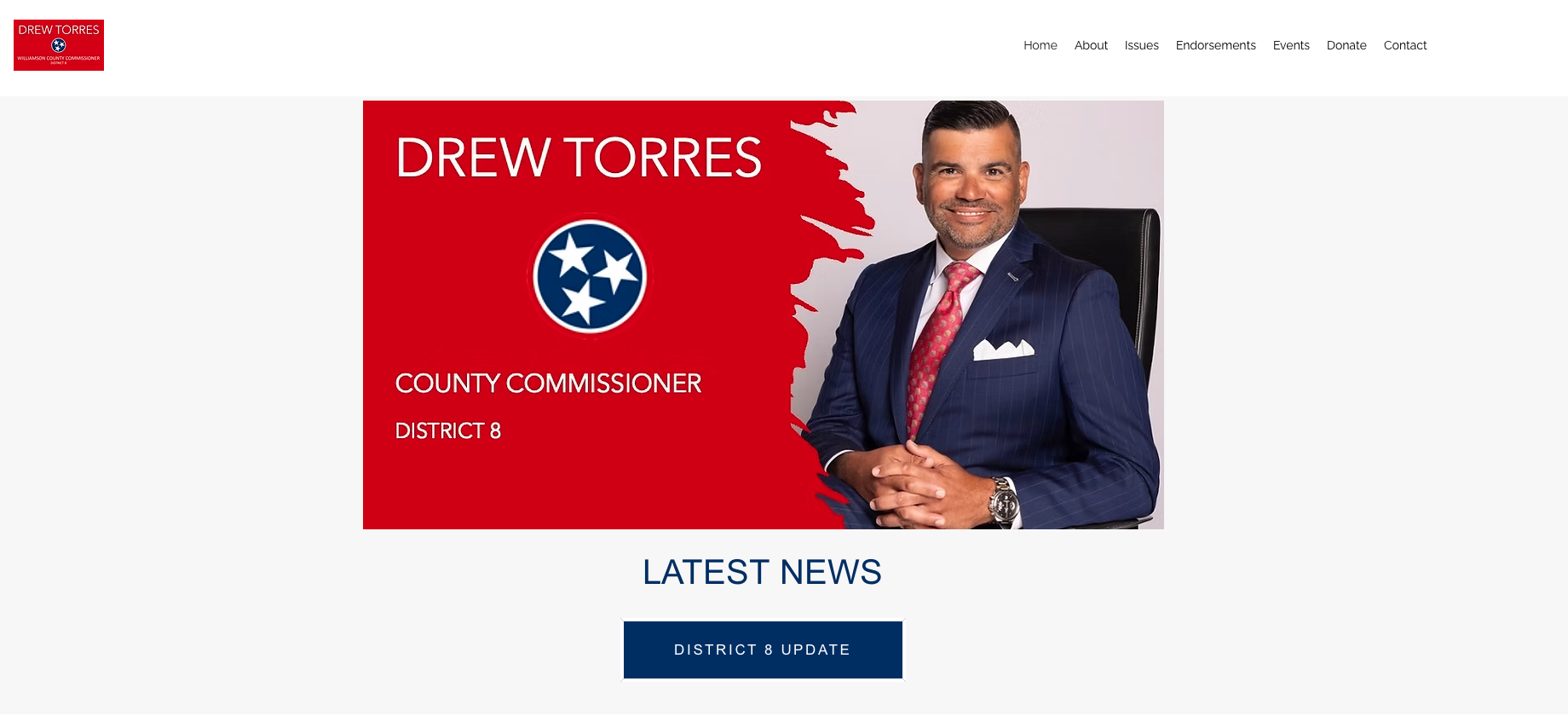
Business-Minded Leadership & Infrastructure Accountability with Drew Torres
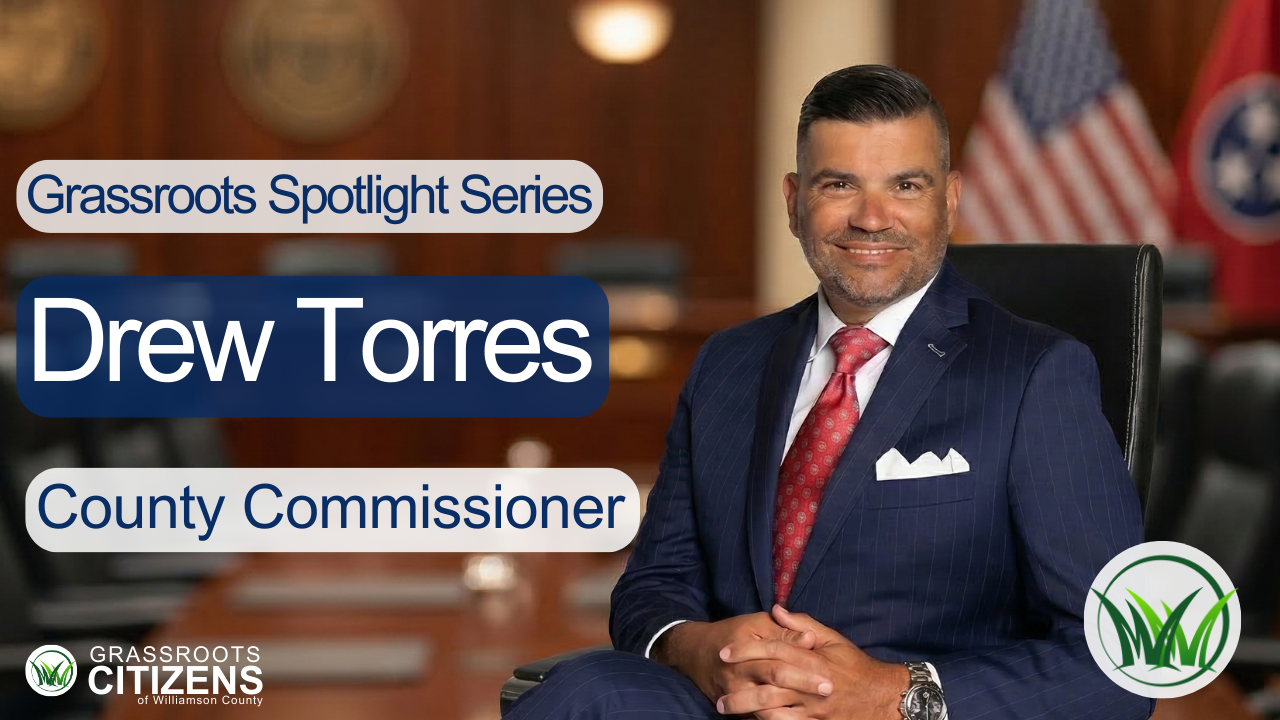
Today, our Grassroots Spotlight features Drew Torres, running for reelection as a County Commissioner in District 8.
“Growth should pay for the infrastructure it requires; taxpayers shouldn’t be left fixing private utility problems after the fact.”
Q: Looking back at your first term, what's been the most significant "eye-opener" regarding county government operations, and how does that experience change your approach to a 2nd term?
The biggest eye‑opener from my first term was realizing just how limited county government actually is under state law.
Even when there’s a clear need, we can only act in areas where the state gives us explicit authority, and that slows down a lot of good ideas. What that’s taught me, and what shapes my approach to a second term, is how to navigate those constraints more effectively.
I now know which issues require state involvement, where the real bottlenecks are, and how to move things forward within the authority we do have.
A second term means starting with that experience already in hand, so we can push harder, work smarter, and communicate more clearly about what’s possible and how we get it done.
Q: You’ve been noted for bringing a "business mindset" to the County Commission. Can you share a specific instance where this professional lens helped the county save money or operate more efficiently?
One clear example was during my time on the Budget Committee. When a tax increase was being discussed, I approached the budget the same way I do in business, by scrutinizing every line item, questioning assumptions, and looking for efficiencies before ever asking taxpayers for more.
After digging in, we identified areas where the county could tighten spending and redirect existing funds. Because of that work, we were able to balance the budget without raising taxes.
That experience reinforced why a business mindset matters in government: when you treat every dollar like it’s your own, you find solutions that respect both the taxpayer and the long‑term health of the county.
Q: As District 8 grows, what changes or investments do you feel are necessary to ensure the Sheriff’s office and EMS can keep pace with our changing population?
Public safety is the most basic responsibility of government, and as District 8 continues to grow, we must make sure our Sheriff’s Office and EMS grow with it.
The number one budget priority has to be public safety. That starts with people. We need to keep investing in competitive pay so we can recruit and retain high-quality deputies, paramedics, and EMTs. I’ve supported efforts to increase deputy pay because if we want the best people to protect our communities, we must compensate them accordingly.
We also need to stay ahead of the curve on staffing levels, equipment, and response infrastructure. As new neighborhoods and commercial areas are developed, that means planning for additional deputies on patrol, expanding EMS capacity, and making sure response times stay low even as our population increases.
Q: One of your platform pillars is "strong local control." How do you balance that when dealing with state-level mandates or the expansion of neighboring municipalities?
Strong local control means the people who live here should have the biggest voice in decisions that affect their daily lives.
District 8 and Williamson County aren’t the same as Nashville or other parts of the state, so policies that work somewhere else don’t always fit here.
When it comes to state mandates, my approach is to work with our state delegation and advocate for flexibility, so counties can make decisions that reflect their communities. The state has a role, but local leaders understand local needs best.
With the expansion of neighboring municipalities, it’s about protecting county residents and making sure growth is handled responsibly. That means clear communication, fair agreements, and making sure county taxpayers aren’t left carrying the burden for decisions made elsewhere.
At the end of the day, strong local control means standing up for the interests of the people who live in District 8 and making sure their voices are heard first.
Q: You and Commissioner Sturgeon recently worked on amending zoning ordinances regarding utility infrastructure. Moving forward, what steps can the county take to ensure developers, not taxpayers, bear the weight of infrastructure demands?
The Limestone situation really highlighted a gap in the system. A privately owned wastewater plant had ongoing failures, including sewage spills into local waterways, yet it was still issuing letters saying it could serve new developments. That meant growth could keep moving forward even when the underlying infrastructure wasn’t ready.
That’s why Commissioner Sturgeon and I worked to amend the zoning ordinance, so utilities must prove they’re in good standing and have the capacity before new development is approved. If a facility is under a state consent order or struggling operationally, it shouldn’t be taking on new taps until those issues are fixed.
Moving forward, there are a few principles we should stick to:
Growth should pay for growth. Developers and utilities need to demonstrate that the infrastructure exists, or fund the upgrades required, before a project moves forward.
We need stronger verification upfront. That means real documentation of water and sewer capacity and clarity on who pays for improvements, not just a letter saying service is available.
We need better coordination between the county, utilities, and state regulators, so problems are caught early instead of after neighborhoods are already built.
Responsible growth means making sure infrastructure is in place first, and making sure the cost of that growth is carried by development, not by the taxpayers who are already here.
Q: The county’s debt and spending are a frequent topic of debate. What's your own approach in deciding whether a new capital project is a necessary investment (or not)?
My approach is pretty straightforward–every capital project has to answer two questions:
Is it truly necessary?
Can taxpayers afford it long-term?
First, I look at whether the project supports the core responsibility of the government. Public safety, roads, and critical infrastructure come first. Those are legitimate investments as our county grows.
Second, I look at the long-term financial impact. Williamson County already carries over $1 billion in outstanding debt, much of it tied to major capital projects. That means every new project needs to be weighed carefully, so we don’t saddle taxpayers with unnecessary borrowing.
Finally, I believe growth should help pay for growth. Tools like the adequate facilities tax on new development are designed to help fund capital needs without putting the entire burden on existing residents.
My standard is simple: if a project strengthens core services and is financially responsible, it’s worth doing. If it doesn’t, taxpayers deserve us to say no.
Q: Are there any specific county processes or departments that you believe are ripe for modernization or simplification?
Septic is the area that has the most focus currently. I have not dug into other areas.
Q: In District 8, what do you feel is the #1 biggest challenge residents are dealing with (& how are you helping)?
The biggest challenge I hear about from residents in District 8 is keeping our infrastructure ahead of our growth, especially when it comes to traffic and utilities.
The Limestone wastewater plant situation is a good example of what happens when infrastructure doesn’t keep pace. That plant has had years of violations and even sewage spills into Cartwright Creek and the Harpeth River, including a leak of nearly 200,000 gallons of raw sewage last year.
Residents have been dealing with odors, environmental concerns, and uncertainty about whether the system can even handle existing demand.
That’s exactly why I’ve been pushing for stronger oversight and zoning changes, so utilities must prove they’re in compliance and have real capacity before new development moves forward.
Growth should pay for the infrastructure it requires; taxpayers shouldn’t be left fixing private utility problems after the fact.
Traffic is the other piece of the puzzle. As new neighborhoods are built, we need to be proactive about road capacity and long-term planning, so people aren’t sitting in traffic just trying to get home.
So, my focus has really been on two things: holding utilities accountable and making sure infrastructure comes first.
If we get that right - roads, water, sewer, and public safety - then growth can happen responsibly without lowering the quality of life that brought people here in the first place.
Q: Looking ahead to 2030, what specific improvement or overall legacy do you want District 8 residents to point to four years from now as a result of your leadership?
By 2030, I want residents in District 8 to be able to say we got ahead of our growth instead of constantly reacting to it.
That means a few tangible things:
stronger oversight of utilities so we don’t repeat situations like the Limestone plant
real progress on traffic and infrastructure planning
continued investment in public safety so our sheriff’s office and EMS can keep pace with the community
Just as important, I want people to know that they have a commissioner who continues to be accessible and responsive; someone who listens, returns calls, and actually works to solve problems.
If four years from now residents continue to feel like their concerns were heard, their quality of life was protected, and the county made responsible decisions about growth and spending, I’ll consider that a success.
Q: Anything else you'd like the residents (& voters) of District 8 to know?
I take responsibility for representing District 8 seriously.
This community is growing quickly, and the decisions we make now will shape what it looks like for decades.
My focus is simple:
protect public safety
make sure infrastructure keeps up with growth
be responsible with taxpayer dollars
I’m going to keep asking tough questions, pushing for accountability when something isn’t working, and making sure the people who live here have a real voice in county decisions. And just as important, I want residents to know they can reach out to me anytime.
Good representation starts with listening, and I’m committed to staying accessible and engaged with the people of District 8.
To learn more about Drew’s campaign and his stance on different issues in Williamson County, you can view his campaign website here: VoteDrewTorres.com.
You can also view all the information on the upcoming Elections here.
If you’re not sure if which district you reside in, Locate Your District here.