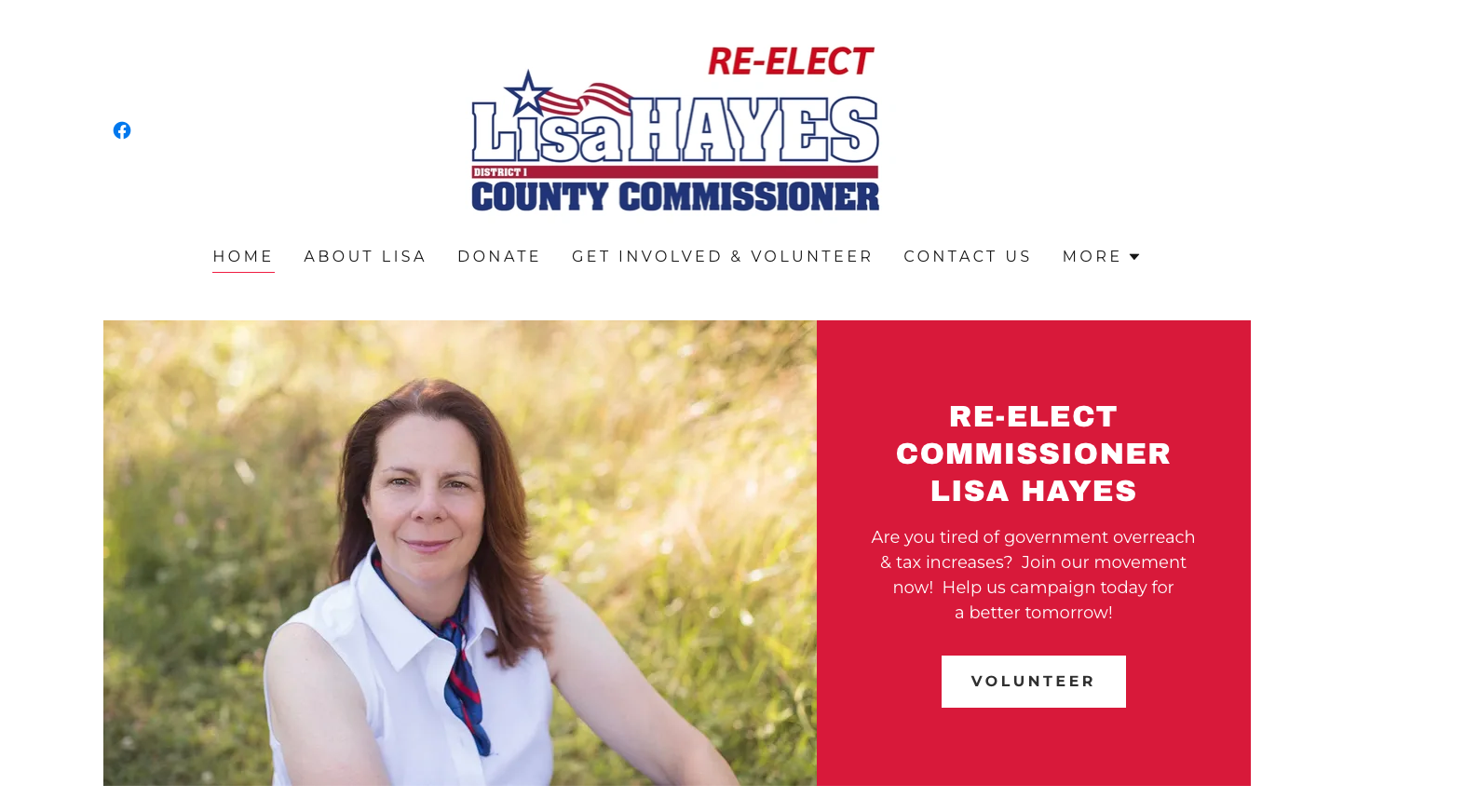
Data-Driven Leadership & Smart Growth with Commissioner Lisa Hayes
Today, our Grassroots Spotlight features Lisa Hayes, running for reelection as a County Commissioner in District 1.
“If we better manage our dollars and push back against rushed, poorly planned spending, we wouldn’t need to ask our citizens for a tax increase.”
After watching the highlights above, dive deeper into Commissioner Hayes’ vision and values for District 1 in our exclusive Q&A below.
Q: Can you give us a quick introduction? Where are you from, and how long have you been in Williamson County?
I moved to Williamson County six and a half years ago. I purchased a small, 98-year-old country store and turned it into a destination restaurant.
I'm originally from Georgia and have lived in a few different states for my career, but I decided this is really where I want to be, amongst people with a similar mindset.
I ran for county commission because I wanted to make a difference and be a public servant rather than a politician.
Q: Looking back at your current term, are there any initiatives you are particularly proud of?
I’m very proud of voting for tax relief for seniors.
I realized that the minimum threshold for senior tax relief wasn't keeping up with Social Security cost-of-living increases, so we corrected that to ensure the minimum threshold automatically follows those increases.
I also realized lower-income residents were sometimes committing petty crimes just to get medical and dental care in jail!
I worked with the sheriff and our health services director to improve the marketing of existing county health and dental services so residents know help is available without having to resort to breaking the law.
Q: What are the biggest challenges you're hearing about from citizens in District 1?
Development and the urban growth plan are massive issues.
For example, in Fernvale, a gentleman tried to purchase a 350-acre property to build a rural retreat. It would have offered no tax benefit or local amenities, just noise ringing through the valley. I rallied the citizens, met with the mayor, and attended the planning commission to successfully oppose it.
The other big issue is tax increases. I voted "no" on the recent tax increase because if we managed our dollars better, we wouldn't need one.
Q: What does "smart growth" mean to you practically speaking?
Smart growth means having boundaries and a plan.
I just co-sponsored an annexation resolution requiring cities to conduct impact studies. When cities annex, we need to know how it impacts our roads, schools, jails, and traffic.
We also need to require that annexations are contiguous to city limits rather than creating "donut holes" in unincorporated areas.
There's no perfect answer, but you do what you can to say, “How can we be smart about it?”.
Q: How do you balance individual property rights with neighbors' concerns about infrastructure and the environment?
It’s a difficult balance. You don't want to tell people what they can and can't do with their property, but we have put measures in place, like the one-home-per-five-acres rule, that help prevent cluster home communities in rural areas.
Citizens aren't being notified at their home addresses. They don't have a way to be notified other than getting the Williamson Herald, and you've got to be lucky to find it in the paper.
A lot of people don't know that the urban growth plan even exists, and you have a right to protect those people who had no idea they're in a plan from all of the sudden waking up going, 'Why are they ripping up the pasture next to my house or my property?'.
Plus, there's no mechanism right now for them to be released from that plan if they desire to.
Recently, I successfully fought for citizens in Burwood to be released from the Thompson's Station and Spring Hill urban growth plan, which took a lot of groundwork and door-knocking.
Q: How do you evaluate projects that may change traffic, land use, and the overall quality of life?
I draw upon my expertise as a corporate professional corporate and ask myself several questions.
Will this project positively or negatively impact the quality of life of my constituents?
Will this project positively or negatively impact the quality of life of my constituents?
What would my constituents want?
What is the cost-benefit analysis?
Do the benefits outweigh the costs?
Q: What’s your framework for deciding when a tax increase is justified versus unacceptable?
First and foremost, we need to be fiscally responsible. We are currently $1.2 billion in debt, and the commission regularly takes out bonds (or loans) instead of paying for projects with current funds. The common reasoning used to justify taking out bonds is that the county is AAA rating.
Instead, we should be paying for projects in real time instead of constantly taking bonds. This way we avoid adding more dollars to our debt.
The Commission, as a whole, needs to critically evaluate how we are spending county dollars to determine if a project is truly important enough to justify taking out a bond.
A perfect example is when we were recently pressured to rush through an $18 million property purchase for a new judicial center. We were asked to approve it without a solid plan, without a building plan to be sure what we need will even fit on the lot.
Also the purchase price is appraisal value. We were initially provided comparable comps. When the a few commissioners pushed back we were given higher-priced property comparisons rather than a fair mix of high and low comps.
If we better manage our dollars and push back against rushed, poorly planned spending like this, we wouldn't need to ask our citizens for a tax increase.
Q: How does your background in HR influence your policy decisions, particularly regarding county employees?
It gives me a very different, data-driven perspective.
Recently, we discussed getting all county employees' a pay raise to the 75th percentile of the market. I asked to review the market data by department to ensure we prioritize the employees that were falling behind first and have a thoughtful approach. The county cannot afford a large across the board pay raise. I would prefer a planned and targeted.
I’m also pushing to drastically improve our benefit package offering. I would like to see a transparent and thorough request for proposal (RFP) process, allowing a variety of carriers to bid on our business so the county can select the best plans from a cost perspective and offer our employees a broader selection of healthcare plans that better meet their needs.
Q: How has your view of being a county commissioner changed since you first took office?
I have a deeper understanding of what a County Commissioner really does and how we our votes impact the county budget. My father use to say, your “actions have consequences.”
This is so true. Being a small business owner and interacting with my constituents on a daily basis gave me a better understanding of which issues were important to them. I am very conscious of how I spend their tax dollars and how I impact their quality of life.
Q: Opponents sometimes try to label conservative candidates with terms like "voter restrictor." How do you address that?
I view it as fighting for election integrity. I became very involved after the 2020 elections when I saw issues unfolding in Georgia, where I'm originally from.
In early 2020, I learned Williamson County had Dominion election machines. I started asking around, met others with a passion for election integrity, and asked, 'What do we do?'.
I began attending Election Commission meetings. I was very vocal about election integrity. Protecting the integrity of the vote is a top priority for me.
Q: What are your top priorities going into this next term?
My main priorities are continuing to give the citizens of Williamson County a voice, educating the public on county processes, and pursuing transparency. I'm proud that we recently voted to have all committee meetings recorded, especially the budget meetings.
Next, I want to ensure that all meeting agendas are published two days in advance, as required by law, so citizens can review them and decide if they want to participate and voice their concerns.
Q: Is there anything else you'd like voters to know about you?
I want people to know that I take their feedback seriously and I advocate for them regardless of their political party and/or involvement with politics.
Whether it's lower the speed limit or helping a resident navigate a complex property road-frontage issue with the planning commission, I’m here to be a public servant for "We the People."
To learn more about Lisa’s campaign and her stance on different issues in Williamson County, you can view her campaign website here: ElectLisaHayes.com
You can also view all the information on the upcoming Elections here.
If you’re not sure if which district you reside in, Locate Your District here.